Government relief programs are meant to provide financial assistance to those truly in need. Unfortunately, scammers can quickly exploit those most vulnerable, preying on people expecting legitimate assistance and tricking them into giving away personal information or even money. So before you click that link or answer that call about your “pending relief payment,” here’s the answer to “What is the relief check scam?”
What Is the Relief Check Scam?
The relief check scam involves criminals impersonating government agencies or relief organizations. Their goal is to steal personal information, banking details, or money from victims who believe they’re claiming legitimate government assistance.
Scam Detectors Most Trusted Websites in Online Security
- Guard.io (100): Protect your digital world on any device – Guardio stops scams and phishing in their tracks.
- Incogni.com (100): Delete your personal data from the internet and protect against scams and identity theft.
- ExpressVPN (100) Stay secure and anonymous online - Best VPN Out There
Scammers will go so far as to create fake websites, send phishing emails, make phone calls, or even send text messages claiming to help victims access their relief payments faster or verify their eligibility. The scam is particularly effective when an actual wave of relief payments is being announced, as people are less likely to question its legitimacy.
How Relief Check Scams Work
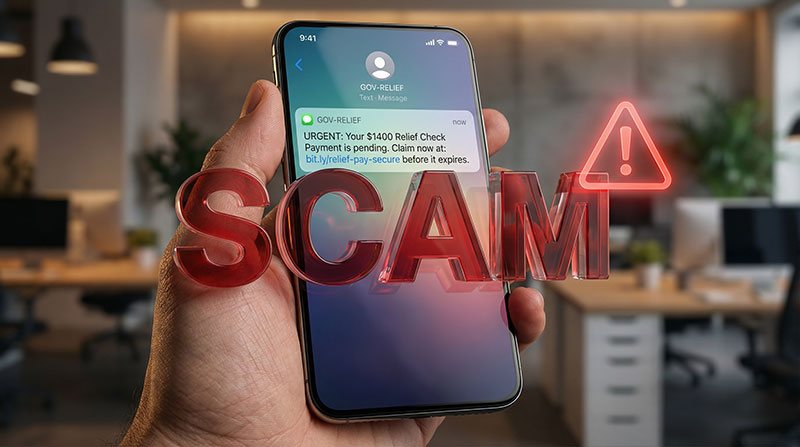
Most scams begin with unsolicited contact, such as a phone call, email, text message, or social media message claiming to be from the IRS, Social Security Administration, FEMA, or another government agency. The scammer tells you that you’re eligible for a relief payment, but you need to “verify your information” to receive it.
They might direct you to a fake website that looks remarkably similar to an official government site, complete with logos and official-sounding language. These sites ask for your Social Security Number, banking details, credit card information, or other sensitive data. Once you provide this information, your bank account is left wide open and scammers can steal from you or open credit lines in your name. The more advanced scams even sell your identity on the dark web.
In some variations, scammers ask you to pay an upfront “processing fee,” “tax,” or “verification charge” to release your relief payment. They may request payment through wire transfer, cryptocurrency, gift cards, or prepaid debit cards. What all these payment methods have in common is that they’re incredibly difficult to track and reverse once you catch up on the fact you’ve been scammed.
Red Flags for Relief Check Scams
The biggest red flag by far of a relief check scam is the request for personal and banking information. A government agency will already have that information as soon as they contact you.
Legitimate government programs typically require you to apply or meet specific criteria. They don’t randomly contact people announcing free money. So any contact about a payment that you don’t remember is likely to be a scam.
Government agencies will also never ask you to pay to receive government benefits. Any request for money in exchange for relief funds is a scam.
Scammers will pressure you to act immediately or threaten that you’ll lose the payment if you don’t respond right away. This is unlike real programs which usually have wide application periods.
How to Protect Against Relief Check Scams
The best defense against relief check scams is awareness and verification. Never respond to unsolicited messages about relief payments. If you think you might be eligible for government assistance, go directly to the official government website rather than clicking on random texts.
If something feels off, trust your instincts. Scammers are sophisticated, but there are almost always red flags. When in doubt, verify independently and never feel pressured to make quick decisions about your financial information.
Verify Another website
Are you just about to make a purchase online? See if the website is legit with our validator:
vldtr®

TOP MUST-WATCH FRAUD PREVENTION VIDEOS
1. Top 5 Amazon Scams in 2024 2. Top 5 PayPal Scams in 2024 3. How to spot a scam Email in 2024
When my sweet old grandmother got caught up in an Amazon gift card scam, I decided then and there that I needed to do whatever I could to inform as many people as possible about the grifters of the world. That’s what I do here – writing about modern scams so you don’t get caught out.