
It’s always nice to get money, but not when that cash is bait being used to take all of yours. Today, we’re looking at a well-known scam, the PayPal 1-cent transaction, where fraudsters deposit a trivial amount into your account and follow it up with an urgent message that prompts you to contact them so they can obtain information to steal your money or details.
One Scam, Several Names
Though we’re looking at the PayPal version of the 1 cent scam, this form of fraud isn’t anything new. Variations are sometimes called the “penny scam,” “small deposit scam,” or “micro-deposit scam.” It’s used to impersonate many companies and financial institutions.
Scam Detectors Most Trusted Websites in Online Security
- Guard.io (100): Protect your digital world on any device – Guardio stops scams and phishing in their tracks.
- Incogni.com (100): Delete your personal data from the internet and protect against scams and identity theft.
- ExpressVPN (100) Stay secure and anonymous online - Best VPN Out There
The amount deposited may vary, but the result is always the theft of money or personal information.
Anatomy of the PayPal 1 Cent Transaction Scam
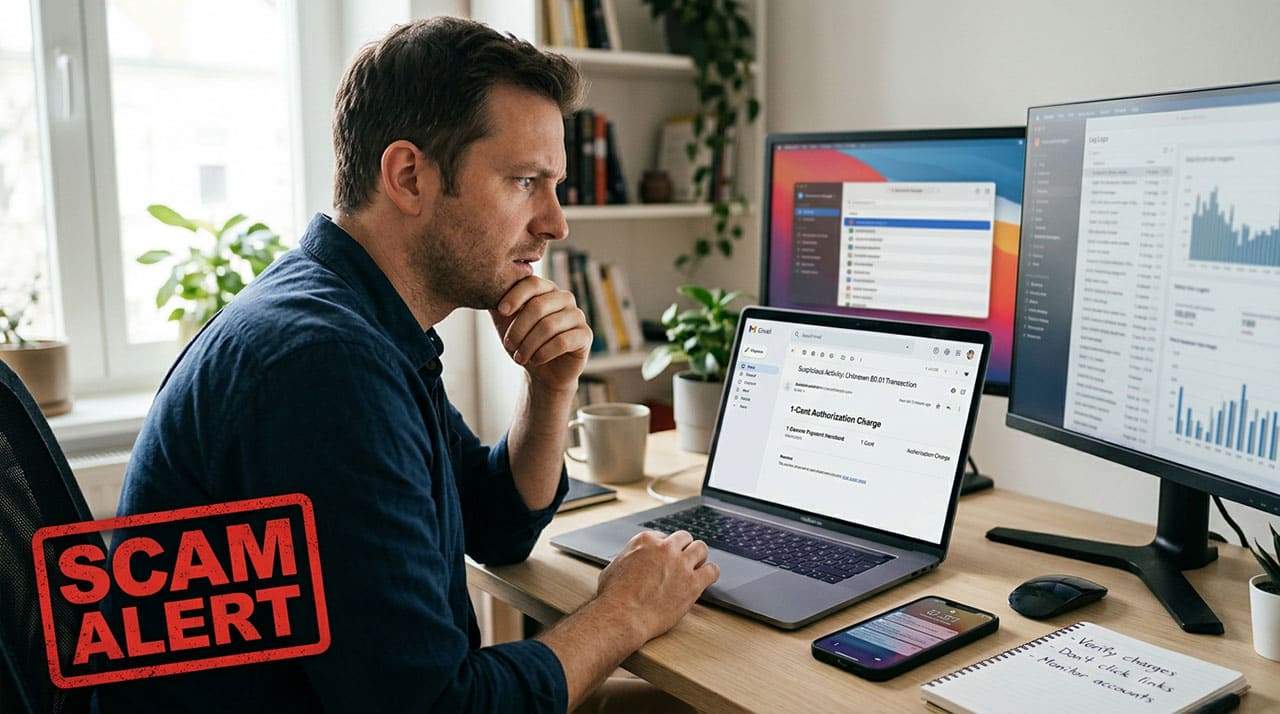
It starts, as many scams do, with unsolicited contact. Your PayPal account notifies you that a trivial amount like $0.01 has been deposited into your account.
As confusing as that is, there comes a follow-up message or email that appears to be from PayPal itself, stating that an even larger amount (from an official-sounding or well-known company) is pending (an amount usually ending in “.99” to represent the penny’s deduction) and that urgent action is needed.
A portal or hyperlink is provided, which the victim, still in confusion and panic, quickly clicks. This takes them to a “help line” or a “login” screen. What happens then may differ. The victim could be tricked by the scammer into installing security software on their PC, which is actually remote access software or malware that can be used to access personal data and bank accounts.
They may also try to “refund” money and send too much, requiring the victim to send back what was never actually paid.
Another form it could take is taking the user to a phishing page (spoofing PayPal, of course) and asking them to put in sensitive information like usernames, passwords, and PINs to halt the imaginary transaction.
A third possible form is for the scammer to ask for money directly, to reverse the charge, in the form of a fee or fine.
Why the Deposit?
If scammers are trying to get money from you, why send you money? Apart from the hefty profit should they succeed, it’s important to know that scammers can’t deduct money from your account until they have access to your details.
The initial deposit is the only option available to them, and the curiosity, or panic, an unknown deposit into your PayPal account can cause is often enough to prompt action on its own, and the fake message with a massive amount mentioned sets the trap.
Guarding Against This Scam
While this scam may take on different forms and even extend beyond PayPal in the future, it’s important to keep safe following the pointers below:
- Beware unsolicited contact – Money and messages out of the blue, especially regarding financial platforms, should never be taken at face value. Urgent language and time limits are classic tactics for spurring an emotional – not rational –
- Confirm with PayPal – Always double-check everything through your PayPal app or through the site directly. Do not use any hyperlink provided in the email. Don’t be afraid to contact them directly to double-check a suspicious transaction.
- Do not reply – Scammers rely on snap reactions. Ignore the temptation to follow up and ignore the message completely. If it is from PayPal, they will try contacting you through their app or site.
- Change your security – If you’ve allowed someone access to your account or even if you just feel compromised, it’s a good idea to change your password and enable two-factor authentication if you haven’t already.
Verify Another website
Are you just about to make a purchase online? See if the website is legit with our validator:
vldtr®

TOP MUST-WATCH FRAUD PREVENTION VIDEOS
1. Top 5 Amazon Scams in 2024 2. Top 5 PayPal Scams in 2024 3. How to spot a scam Email in 2024
When my sweet old grandmother got caught up in an Amazon gift card scam, I decided then and there that I needed to do whatever I could to inform as many people as possible about the grifters of the world. That’s what I do here – writing about modern scams so you don’t get caught out.













Just went thru that scam, not deposits but paypal charges to my checking and I don’t have paypal account, is a nightmare you have to close your account, start a new one and then get all your automatic withdrawals and deposits notified, social security was the worst.
thank you!
Please investigate the numerous online games that promise payment using PayPal, direct bank deposits, Amazon and Walmart gift cards etc. Once the level is reached to withdraw then a new condition is put either play more levels or one can only withdraw if one earns a higher amount to withdraw. At the bottom or top of the screen the messages are running displaying names and amounts people are withdrawing. These are fake promises and it’s shocking to see that banks, corporate companies etc names are being used to deceive people. There must be some way to stop these fraudsters unsure if the companies pay the game developers to advertise but the players are never paid.