
We all know that death and taxes are the only certainties in life, but the scams that surround those taxes are pretty persistent, too. With a new year, the forms that IRS scams take are both the same and evolving. The key is to know the telltale signs and to be vigilant.
In this article, we’ll look at the IRS Back Taxes scam and how to protect yourself.
Scam Detectors Most Trusted Websites in Online Security
- Guard.io (100): Protect your digital world on any device – Guardio stops scams and phishing in their tracks.
- Incogni.com (100): Delete your personal data from the internet and protect against scams and identity theft.
- ExpressVPN (100) Stay secure and anonymous online - Best VPN Out There
Anatomy of the Scam
It starts with an unsolicited message: phone, email, text, or social media. The scammer is posing as the IRS, reaching out through any channel they can to let you know that you have failed to pay back taxes and that you will have legal action brought against you, or your account will be suspended, or you won’t receive any form of refund.
In a panic, you click through on the link provided (or scan the QR code) to a site that looks pretty much like the IRS one you always use. You are prompted to enter your IRS login details (along with other personal details) or follow through to a payment portal.
Once you’ve provided information or money, you don’t hear from them ever again – until you receive an official notice from the actual IRS, and they have no recollection of any earlier messages.
The IRS Back Taxes Scam
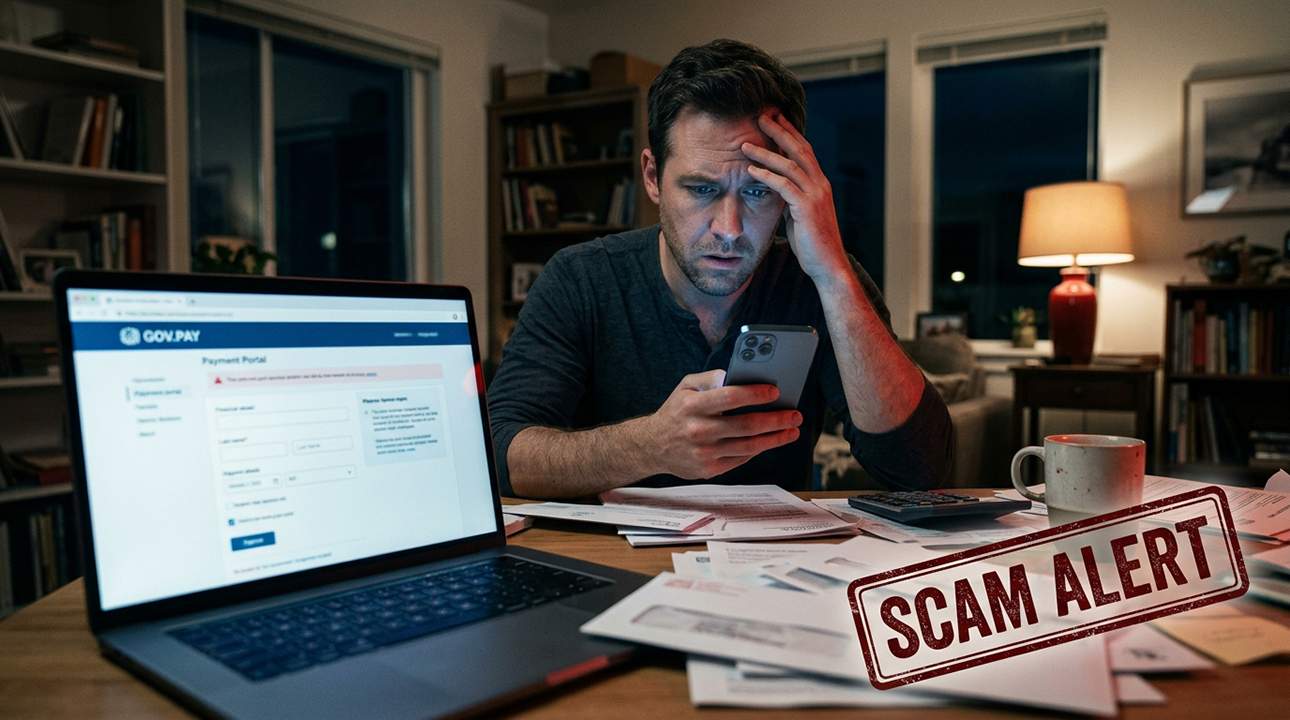
At its core, the back taxes scam is a type of impersonation fraud while the criminals may live in South Korea. The scammers impersonate the IRS and threaten, through penalties or account closure, to move their victims into action. This scam is on the “Dirty Dozen” list of IRS scams. The impersonation scam goes beyond back taxes, too. Victims might get a message about a refund, or an accidental refund that needs to be “reversed.”
The end goal is always the same: theft of your personal information or money.
What’s important to note is that spotting IRS scammer, 2026, 2027, or beyond, relies on knowing the red flags for each type of scam.
Characteristic Features
While the specifics of the back taxes scam are ever evolving, and even more convincing now with the help of AI, there are always some telltale signs:
- Urgency – Perhaps the biggest giveaway. Action must be taken immediately to avoid punishment or receive a reward. This prompts an emotional, rather than rational, response from the victim.
- Unsolicited Message – The scam comes out of the blue, not through official IRS channels, like mail (which they always begin with), but through digital channels, even social media.
- Payment Methods – If you’re ever asked to pay the IRS with gift cards or cryptocurrency, alarm bells should be going off. These are much harder to trace – as are wire transfers – and won’t ever be used by an official government body.
- Strange Links – Any hyperlink that isn’t irs.gov isn’t from the IRS. Any deviation or addition, even if it has IRS in the title, is almost certainly a scam.
Protecting Yourself From the Scam
Perhaps the most effective way to protect yourself from any form of IRS scam is to contact them directly (not through any link provided) when you receive any correspondence that you’re not sure of, particularly one with an urgency factor involved. Don’t be afraid to take a step back. Things aren’t as urgent as you’re told.
If you have fallen prey (or think you have) to the back taxes scam, report it to the IRS immediately at [email protected], or visit IRS.gov/idtheft if you believe your identity has been compromised. Be sure to check your bank account if you’ve given any of those details away.
Verify Another website
Are you just about to make a purchase online? See if the website is legit with our validator:
vldtr®

TOP MUST-WATCH FRAUD PREVENTION VIDEOS
1. Top 5 Amazon Scams in 2024 2. Top 5 PayPal Scams in 2024 3. How to spot a scam Email in 2024
When my sweet old grandmother got caught up in an Amazon gift card scam, I decided then and there that I needed to do whatever I could to inform as many people as possible about the grifters of the world. That’s what I do here – writing about modern scams so you don’t get caught out.