
Remote work has revolutionized hiring, allowing companies to hire regardless of geographical limitations. But this has led to some scammers creating fake accounts and job candidates to steal valuable corporate information.
Here’s how to protect businesses against deepfake job candidates.
Scam Detectors Most Trusted Websites in Online Security
- Guard.io (100): Protect your digital world on any device – Guardio stops scams and phishing in their tracks.
- Incogni.com (100): Delete your personal data from the internet and protect against scams and identity theft.
- ExpressVPN (100) Stay secure and anonymous online - Best VPN Out There
What Are Deepfake Job Candidates?
Deepfake job candidates are those who have used AI to alter their appearance, voice, or credentials during the hiring process. This can range from using filters during video interviews to completely fabricating identities combined with synthetic faces and voices.
The technology behind these scams has become remarkably sophisticated. Modern AI tools can generate realistic video and audio in real-time, swap faces during live video calls, clone voices from short audio samples, and even create entirely synthetic personas that don’t correspond to any real person.
Some fraudsters use these tools to appear as someone they’re not, in this context to secure remote positions they have no intention of performing themselves. When hired, the employee is likely to just steal or abuse company information and then disappear.
While resume padding has existed for decades, deepfakes go to the next level, maintaining the deception through live video interactions. This makes the actual interview much challenging to be used as a filtering tool if you’re not versed in deepfake protection and spotting. The last suspicious campaign was ‘what is Curaçao‘ during the World Cup.
Red Flags of Deepfake Job Candidates
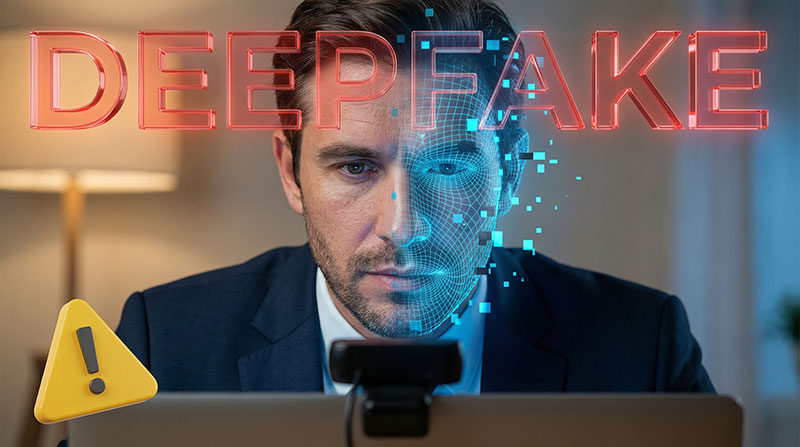
Considering that it’s difficult to ascertain the legitimacy of a CV, the video interview is the next natural step for spotting red flags and protection against deepfake videos. Keep an eye on the following:
- Poor video quality or lag that seems inconsistent with their internet connection. Deepfake technology often creates artifacts, which are strange movements, facial distortions, or synchronization problems between lip movements and speech.
- Candidates who refuse to turn on their camera or consistently have “technical difficulties” that prevent clear video.
- Unnatural movements or expressions.
- Lack of tonal changes between answers. Most deepfake candidates will seem like they’re reading from a script if they use AI-generated voices.
- An unchanging background that depicts a home or office. Deepfakes have trouble with backgrounds, so some scammers put a filter over it to make it static.
How to Protect Your Business Against Deepfake Job Candidates
The best defense against deepfake job candidates is a multi-layered verification approach that goes beyond traditional hiring practices.
From the start, you might want to ask for verified photos, conduct live video interviews with spontaneous elements that can’t be pre-recorded, and use multiple video platforms to make deepfake technology harder to deploy consistently.
You can also use professional background check services that verify employment history, education credentials, and professional licenses. Deepfakes can’t fake institutional records.
For sensitive positions, consider requiring in-person meetings at some point in the hiring or onboarding process, even for remote roles. While it might not sound practical, it’s the best verification method that has worked for decades.
For the onboarding process, verify that the person who shows up for work (virtually or in person) is the same person who was interviewed. That means you need to extend your checks before and after the interview.
Finally, maintain healthy skepticism without becoming paranoid. Most candidates are legitimate, but in today’s technological landscape, verification should be thorough and consistent. Don’t automatically treat every applicant as suspicious, but be prepared to ask everyone to verify their identity if needed.
Verify Another website
Are you just about to make a purchase online? See if the website is legit with our validator:
vldtr®

TOP MUST-WATCH FRAUD PREVENTION VIDEOS
1. Top 5 Amazon Scams in 2024 2. Top 5 PayPal Scams in 2024 3. How to spot a scam Email in 2024
When my sweet old grandmother got caught up in an Amazon gift card scam, I decided then and there that I needed to do whatever I could to inform as many people as possible about the grifters of the world. That’s what I do here – writing about modern scams so you don’t get caught out.