

Many people eagerly invest in non-fungible tokens, or NFTs, in the hopes of making big profits in the future. Unfortunately, the world of cryptocurrencies and NFTs is rife with scamming activity, and NFT social engineering scams are among the most dangerous and easy to fall victim to.
What Are NFT Social Engineering Scams?
Before we look at how a typical NFT social engineering scam works and how you can protect yourself, it’s important to have a clear definition of “social engineering” as a concept.
Scam Detectors Most Trusted Websites in Online Security
- Guard.io (100): Protect your digital world on any device – Guardio stops scams and phishing in their tracks.
- Incogni.com (100): Delete your personal data from the internet and protect against scams and identity theft.
- ExpressVPN (100) Stay secure and anonymous online - Best VPN Out There
Social engineering is an increasingly common scam technique that involves psychologically manipulating victims into giving up sensitive data or doing other actions that could put their money or identities at risk. Social engineering attacks can come in many forms but often involve deception and trickery, all aimed at fooling someone into doing something risky.
NFT social engineering scams, therefore, make use of these techniques but with an explicit focus on stealing or gaining access to a victim’s NFT collections and crypto wallets.
How NFT Social Engineering Scams Work
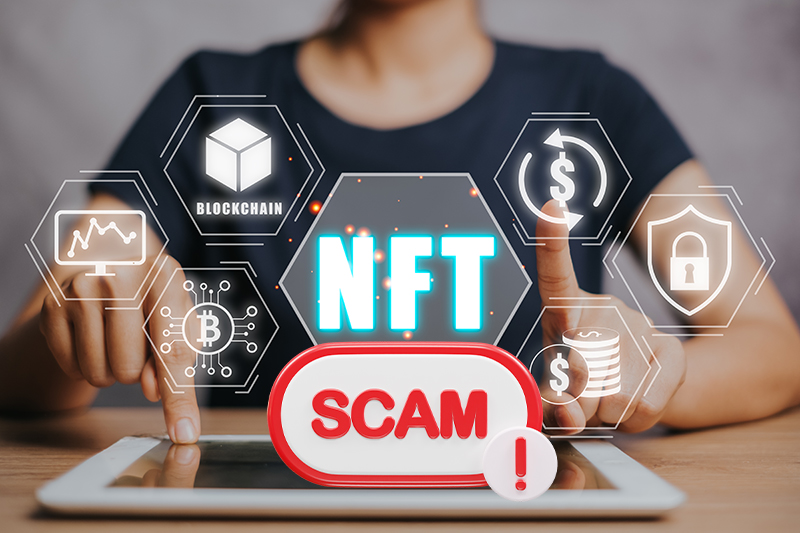
Criminals can resort to various techniques to carry out these social engineering scams:
- Phishing Attacks: One of the most common methods involves scammers creating fake versions of real NFT marketplaces or wallet login pages. They then send links to their victims, encouraging them to click and grant wallet access.
- Fake Airdrops: In this attack, the criminals offer something enticing to the victim, like access to an exclusive airdrop or free mints, which they hope encourages them to click and accept. In reality, they’re simply trying to gain access to the user’s wallet to steal their assets.
- Impersonation Scams: This is when scammers pretend to be someone else, like an NFT project leader or site moderator, and reach out to the victim with personal messages or requests, with the end goal of getting the victim’s login information or seed phrases.
- Pump and Dumps: These attacks involve scammers basically setting up fake NFT projects or hyping up new releases using marketing, bots, and other means to generate FOMO, or “fear of missing out” in their victims, who end up investing and then losing money.
NFT Social Engineering Scam Prevention
Fortunately, even though there are many possible NFT social engineering scam techniques to watch out for, users also have plenty of tools and techniques at their disposal to protect themselves:
- Never share your seed phrases or wallet information with anyone else, even NFT project heads or support staff, as legitimate users will never ask for this.
- Always double-check links and make sure you’re on the official, secure site before entering your personal information.
- Be very cautious of anyone who contacts you directly, asking for personal details or information about your crypto wallet, especially if these messages are unsolicited.
- Opt for a hardware wallet, if possible, so you can keep your private keys offline and make it much harder for anyone to steal your assets.
It’s also wise to keep yourself informed and up to date on the latest scam techniques going around the crypto community so you know exactly what to watch out for, as criminals are always coming up with new ways to fool their victims.
Verify Another website
Are you just about to make a purchase online? See if the website is legit with our validator:
vldtr®

TOP MUST-WATCH FRAUD PREVENTION VIDEOS
1. Top 5 Amazon Scams in 2024 2. Top 5 PayPal Scams in 2024 3. How to spot a scam Email in 2024
When my sweet old grandmother got caught up in an Amazon gift card scam, I decided then and there that I needed to do whatever I could to inform as many people as possible about the grifters of the world. That’s what I do here – writing about modern scams so you don’t get caught out.