
Given how prevalent scams are in the world, you’d think we would have wizen up against them by now. And yet, day after day we find more reports of major fraud and scams sweeping through news outlets. Let’s answer “why do we fall for scams” from a psychological perspective.
The Psychology Behind Scam Deception
The most common misconception about scams is that they target ignorant people. In reality, scammers understand human behavior better than we understand ourselves. They exploit universal weaknesses that can’t be correlated with a person’s IQ score or any other given measure of knowledge.
Scam Detectors Most Trusted Websites in Online Security
- Guard.io (100): Protect your digital world on any device – Guardio stops scams and phishing in their tracks.
- Incogni.com (100): Delete your personal data from the internet and protect against scams and identity theft.
- ExpressVPN (100) Stay secure and anonymous online - Best VPN Out There
Psychologists point out that scammers use two primary weapons: emotion and cognitive bias. They don’t attack your logic. They attack your feelings. When you’re afraid, hopeful, desperate, lonely, or excited, your rational brain takes a back seat, and you’re more likely to make rash decisions.
In fact, some data posits that smart people often fall for scams more easily than others. Because they are overconfident in their ability to spot deception, they believe their intelligence will protect them. Then, when presented with a well-crafted scam that exploits a specific cognitive bias, their confidence becomes a liability. They don’t second-guess themselves or ask for a second opinion. They act on their gut feeling, which is exactly what the scammer predicted.
Seven Cognitive Biases That Make You Vulnerable
In the broadest possible sense, scammers will abuse one of the seven psychological biases that pretty much every person has:
- Optimism Bias – The belief that bad things are more likely to happen to others than to ourselves. We think “that won’t happen to me,” which lowers our guard.
- Truth Bias – We assume that others are telling the truth unless proven otherwise. Scammers exploit this by crafting messages that sound authentic and are repeated consistently until we believe them.
- Authority Bias – We are more likely to comply with requests from perceived authority figures. Scammers impersonate government officials, bank representatives, police officers, or company executives.
- Confirmation Bias – Once we’ve committed to a belief, we seek information that confirms it and ignore information that contradicts it. If you believe a scammer is legitimate, you will explain away red flags and search for evidence supporting your belief. As soon as you become invested, you’re hooked.
- Loss Aversion – We feel the pain of losing $100 much more intensely than the pleasure of gaining $100. Scammers exploit this by creating a sense of “impending loss.” “Your account will be closed!” “You’re losing this opportunity!” “This offer expires in one hour!” The fear of loss overwhelms rational judgment.
- Scarcity Heuristic – We want things more when they seem rare or limited. “Only 3 spots left!” “This exclusive offer is available only today!” When something seems scarce, people make faster decisions with less critical thinking.
- Cognitive Dissonance – Once we’ve made a decision, we work hard to avoid admitting we were wrong. Even when warning signs appear, victims rationalize them.
The Emotional Triggers Scammers Exploit
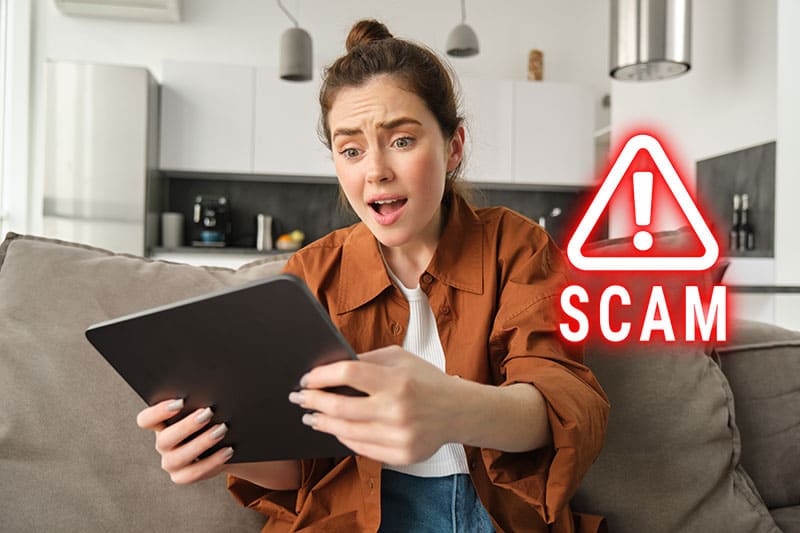
Beyond cognitive biases, scammers deliberately trigger specific emotions to short-circuit rational thinking.
Chief of these are urgency and fear. Whenever there’s a deal that will last only for the next however many minutes, people go into overdrive and try to do their best to get it. It’s the fear of missing out combined with the lack of information.
Scammers can also abuse positive emotions, such as hope, trust, or belonging. Creating a narrative where you gain something, however improbable, is a powerful rule if you think you don’t have a lot more to lose.
Finally, the people being scammed might even realize partway through they are a target, but their shame keeps them from reaching out to someone and stopping it. Instead, they might make excuses and push further in, often in the vain hope of reclaiming some of their lost money.
Who Is Most Vulnerable to Scams?
Surprisingly, pretty much every age group is vulnerable to a scam, since scams are designed primarily to prey on specific characters and financial behaviors.
For example, young adults can lose the most money by having limited financial experience and eagerness to “win it big” with get-rich-quick schemes. On the other end of the spectrum, some older adults have sizeable savings that they spend on perceived romantic or social interests in an effort to combat grief or loneliness.
How to Become Less Vulnerable to Scams
While it might sound silly, questioning whether something is too good to be true is usually the first sign of developing some sort of “immunity” against scams. Skepticism leads to critical thinking, which can often mean the difference between realizing the phishing mail has that one wrong letter in the address bar.
Additionally, having a support network can be monumentally helpful. If you think you’re seeing a red flag for a scam, talk to a friend about it. They can offer an unbiased perspective.
Verify Another website
Are you just about to make a purchase online? See if the website is legit with our validator:
vldtr®

TOP MUST-WATCH FRAUD PREVENTION VIDEOS
1. Top 5 Amazon Scams in 2024 2. Top 5 PayPal Scams in 2024 3. How to spot a scam Email in 2024
When my sweet old grandmother got caught up in an Amazon gift card scam, I decided then and there that I needed to do whatever I could to inform as many people as possible about the grifters of the world. That’s what I do here – writing about modern scams so you don’t get caught out.