
It’s the season for giving, but many are also looking to take. You might be looking to make a difference by donating to a charitable cause this holiday season, but you should also be aware that not every request for funds is legitimate.
In this article, we’ll be telling you more about holiday charity scams and how to guard against them.
Scam Detectors Most Trusted Websites in Online Security
- Guard.io (100): Protect your digital world on any device – Guardio stops scams and phishing in their tracks.
- Incogni.com (100): Delete your personal data from the internet and protect against scams and identity theft.
- ExpressVPN (100) Stay secure and anonymous online - Best VPN Out There
Too Many Holiday Scams
There’s no one holiday charity scam. Fraudulent activity and phishing attempts take on all forms to try and obtain money or personal information from victims eager to do some good. The general mode of operation of the charity scam is a broad or targeted message sent via personal contact details or social media from someone posing as a charitable organization. It could be a new charity, or an impersonation of a well-known one.
The victim is directed to a page or given an account or QR code where they can donate or sign up for a regular contribution. The money that’s requested goes to enriching the scammers rather than helping the organization in need.
Warning Signs
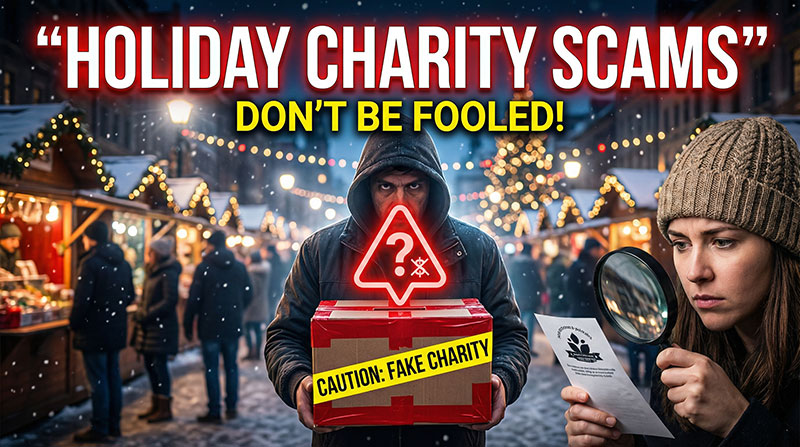
Though there is no one surefire way to spot holiday charity scams, there are numerous red flags that can add up quickly and should make you suspicious before choosing to donate:
- The payment method – Scammers rely on receiving payment that can’t be traced. To this end, they’ll ask for donations in the form of cryptocurrency, gift cards, wire transfers, and store credit cards.
- Time pressure – Scammers employ time crunch tactics to pressure victims into making decisions before their rational sides catch up.
- Indirect numbers and strange links – Scammers imitating well-known charities can’t rely on the site URLs and official contact details of the real deal and resort to hiding or spoofing this information. Beware unknown numbers and addresses that don’t match up exactly.
- The message itself – Keep an eye out for spelling and grammar mistakes. In the case of major charities, pay close attention to branding errors, such as logos and font choices.
- Text-to-Donate – Though not always a scam, the text-to-donate request is a favorite choice of scammers for its ease of use. If you receive such a request, follow up with the charity itself on their main site or main contact number.
- Crowdfunding – Many individuals and organizations set up crowdfunding pages to raise funds, but these can also be used to obtain money and disappear. They’re not always a scam, but can be.
Guarding Against Holiday Charity Scams
It may seem like an uphill battle, but there are definitely ways you can guard against holiday charity scams:
- Research the charities you wish to donate to or those asking for assistance. Sites like Give.org provide a comprehensive list and breakdown of officially vetted charities to help you tell the real from the fake and see where your donations are going. Also, look for an online presence for these charities. The more varied and wide the footprint, the better.
- Avoid opening any attachments or following any links you aren’t entirely sure of. If in doubt at any stage, contact the charity directly, if possible, and donate via their main site.
- Don’t respond to calls or messages from unknown numbers. A real charity should have no problem providing credentials. Don’t be afraid to ask.
- Never give out personal information over a call or via messages. Remember that legitimate organizations will never ask you for these details when contacting you.
Verify Another website
Are you just about to make a purchase online? See if the website is legit with our validator:
vldtr®

TOP MUST-WATCH FRAUD PREVENTION VIDEOS
1. Top 5 Amazon Scams in 2024 2. Top 5 PayPal Scams in 2024 3. How to spot a scam Email in 2024
When my sweet old grandmother got caught up in an Amazon gift card scam, I decided then and there that I needed to do whatever I could to inform as many people as possible about the grifters of the world. That’s what I do here – writing about modern scams so you don’t get caught out.