
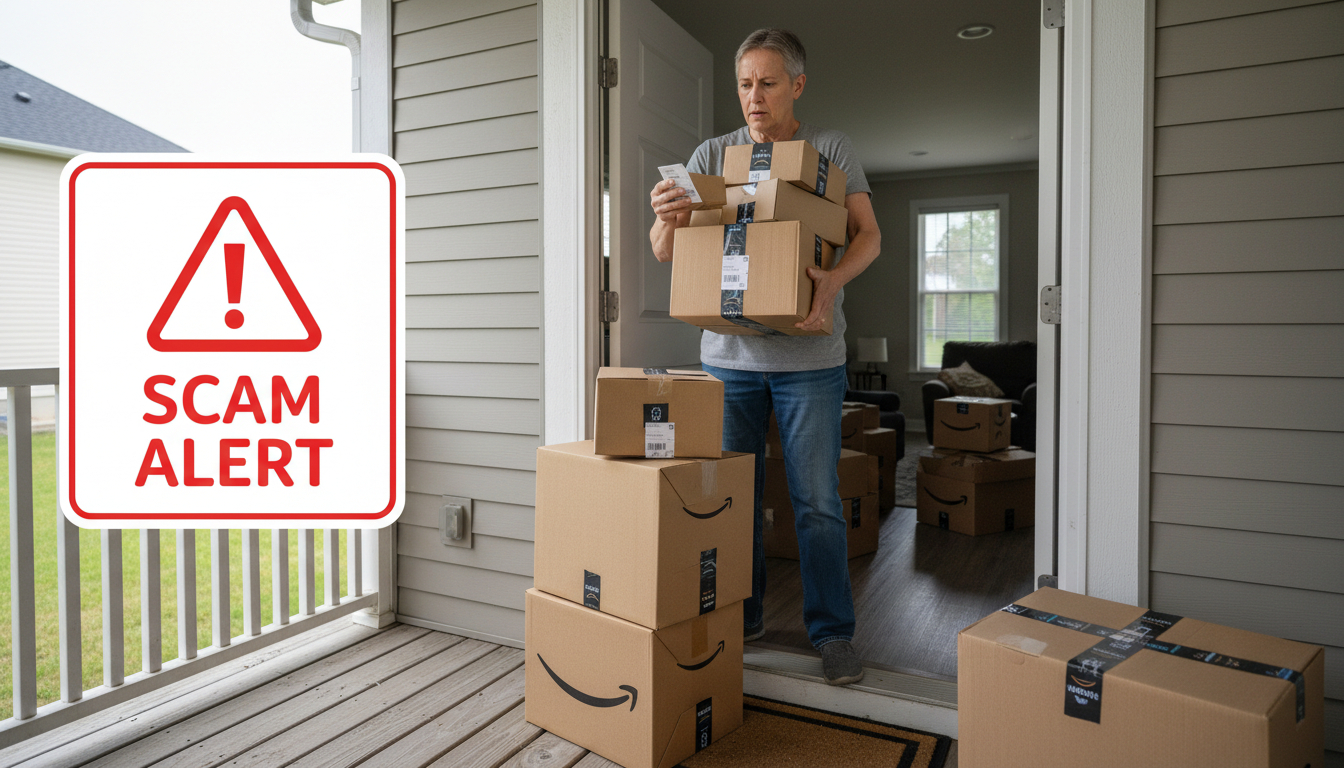
Getting new deliveries is usually exciting, but what if something appears on your doorstep that you don’t remember ordering at all? Even a small, unknown item, as it turns out, could pose a danger by being a part of a long-running Amazon package scam. Here’s what you need to know.
How Does the Amazon Package Scam Work?
There are a few different variations of the scam, with conflicting reports on the actual danger they pose to you.
Scam Detectors Most Trusted Websites in Online Security
- Guard.io (100): Protect your digital world on any device – Guardio stops scams and phishing in their tracks.
- Incogni.com (100): Delete your personal data from the internet and protect against scams and identity theft.
- ExpressVPN (100) Stay secure and anonymous online - Best VPN Out There
First is the brushing scam, which is typically used to prop up an Amazon entry with reviews. The way it works is that a scammer will somehow obtain some of your contact information, then use it to create a fake account under your name. Then, they “order” items to be delivered to your address, which are used as proof of delivery and the basis of a review being put on Amazon for the item.
This option is the least “damaging” since you basically receive an item you never ordered (and the quality of which is dubious at best). The Federal Trade Commission has declared that you can keep the item you received, as it’s considered yours. However, the fake review is essentially used to trick Amazon’s algorithm into suggesting the item to more people and boost its legitimacy, which leads to other people ordering the item (and how the scammers make money).
Secondly, an extension of the scam includes additional information printed on them, usually with QR codes or links that indicate instruction manuals or return addresses. In reality, these are malware that can automatically get downloaded to your device if you open the link, which could lead to a host of new issues.
Finally, there’s the original problem of how the scammers got your name and address in the first place. Someone knowing your name and contact information well enough to arrange the delivery indicates that it was obtained from somewhere, so a part of your data was already leaked.
What to Do if You Think You’re Being Targeted by a Brushing Scam?
Since Amazon has its own practices for reducing fraud, contact Amazon’s Customer Service with details on the item or the original manufacturer or supplier. Secondly, if you receive items you haven’t ordered regularly or even semi-regularly, you can report the fraud to the Federal Trade Commission directly.
If the item comes with instructions on opening links, QR codes, or requiring payment for the delivery, or if someone calls you to tell you that you need to pay for the item, ignore them. These are all attempts to get more money or information out of you.
Finally, you might want to change the passwords on your accounts, especially those that contain your address for delivery information (like Amazon).
As for the item from the Amazon package scam itself, it’s up to you whether you want to keep it. While most of the items are going to be relatively cheap, some people have reported getting more luxurious items. In this case, there are higher chances you’ll be contacted to “rectify the issue.” You might want to involve your local law enforcement, as well as notify the shipping company, to let them know of a potential fraud.
Verify Another website
Are you just about to make a purchase online? See if the website is legit with our validator:
vldtr®

TOP MUST-WATCH FRAUD PREVENTION VIDEOS
1. Top 5 Amazon Scams in 2024 2. Top 5 PayPal Scams in 2024 3. How to spot a scam Email in 2024
When my sweet old grandmother got caught up in an Amazon gift card scam, I decided then and there that I needed to do whatever I could to inform as many people as possible about the grifters of the world. That’s what I do here – writing about modern scams so you don’t get caught out.