


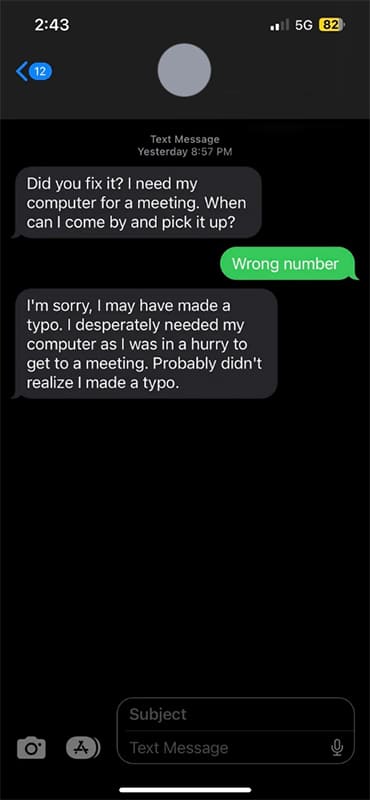
You get a friendly text from an unknown number. Maybe it says something like, “Hey, are we still on for dinner tonight?” or “Hi Jennifer, I just landed in Miami!” You reply, letting them know they’ve got the wrong number, and they respond with a casual, friendly message. It feels harmless, even kind of funny.
But this isn’t just a random mix-up; it’s a setup. You’ve just been pulled into a growing type of fraud. So, what is the wrong number text scam? It’s a slow-burn con that starts with a simple mistake and ends with financial or identity theft, often months later.
Scam Detectors Most Trusted Websites in Online Security
- Guard.io (100): Protect your digital world on any device – Guardio stops scams and phishing in their tracks.
- Incogni.com (100): Delete your personal data from the internet and protect against scams and identity theft.
- ExpressVPN (100) Stay secure and anonymous online - Best VPN Out There
How the Scam Begins
At first, the scammer sends you a message that looks like a genuine mistake. The goal is to start a conversation. After you respond, the scammer chats back politely, sometimes apologizing and striking up small talk. They might say something like, “You seem nice, mind if we keep chatting?” or “That’s funny, maybe we were meant to meet anyway.”
Unlike typical phishing scams that ask for money right away, the wrong number text scam plays the long game. It’s designed to build trust. Over days or weeks, the scammer may turn the conversation flirtatious or personal. You might even begin to feel like you’re getting to know someone new.
What’s really happening is social engineering, a method scammers use to manipulate people emotionally, often before asking for something big.
What’s the Endgame?
Eventually, the scammer shifts the conversation to money. Sometimes, they claim to be a successful investor and offer to “teach” you how to make money with cryptocurrency or stocks. Other times, they claim to be in trouble and ask for help, maybe a short-term loan or a gift card to get out of a jam.
In many reported cases of the wrong number text scam, victims are persuaded to move the chat to WhatsApp or Telegram, where the scammer has more freedom and fewer content restrictions. From there, they may share fake screenshots of investment profits or links to fraudulent trading platforms.
It’s not always about crypto or cash. Some scammers just want personal information enough to steal your identity or access your accounts.
What makes this scam so successful is how personal it feels. You’re not being pressured by a bank alert or threatened with legal action. You’re being drawn into what feels like a real connection.
Why It’s Spreading

The wrong number scam is exploding because it’s easy and low-risk for criminals. They use auto-dialers or SMS-blasting tools to send thousands of messages at once, whether they come from the US or Cambodia; they don’t need everyone to respond, just a few curious or kind people willing to engage.
In many cases, the scammer will even use a profile picture of an attractive man or woman, making it easier to lure in lonely or isolated individuals. Once they’ve got your attention, they take their time and reel you in.
How to Stay Safe
If you get a text from someone you don’t know claiming it’s a wrong number, be cautious. You can ignore it or send a short reply, but never share personal information, photos, or financial details.
If the conversation turns flirtatious or financial, end it immediately and block the number. You can also report it to the Federal Trade Commission.
If you’ve already given information or made a payment, contact your bank right away and consider freezing your credit to prevent further damage.
Verify Another website
Are you just about to make a purchase online? See if the website is legit with our validator:
vldtr®

TOP MUST-WATCH FRAUD PREVENTION VIDEOS
1. Top 5 Amazon Scams in 2024 2. Top 5 PayPal Scams in 2024 3. How to spot a scam Email in 2024
When my sweet old grandmother got caught up in an Amazon gift card scam, I decided then and there that I needed to do whatever I could to inform as many people as possible about the grifters of the world. That’s what I do here – writing about modern scams so you don’t get caught out.