
Scammers are always coming up with new ways to trick people into giving them money. The Pegasus email scam is a trending scam in which scammers try to extort victims into paying a cryptocurrency ransom to avoid compromising videos, audio, and photos being shared on the Internet and sent to their contacts. It's similar to the old variation of this extortion scam and the Zero Day Vulnerability Email scam, in which they employ the same tactic but they make it more believable.
Let’s dig deeper into how this scam works and how to avoid falling victim.
Scam Detectors Most Trusted Websites in Online Security
- Guard.io (100): Protect your digital world on any device – Guardio stops scams and phishing in their tracks.
- Incogni.com (100): Delete your personal data from the internet and protect against scams and identity theft.
- ExpressVPN (100) Stay secure and anonymous online - Best VPN Out There
How Does Pegasus Email Scam Work?
This scam begins with an unexpected email in which scammers inform their potential victims that they have hacked into their phones or computers and found compromising videos, photos, and audio files.
They'll threaten to expose those compromising materials if they don’t agree to pay a hefty ransom of a few thousand dollars in cryptocurrency.
The Pegasus scam email uses fear and shame to trick people into paying the demanded ransom. The scammers claim they caught the victims visiting shady adult websites to make them feel ashamed.
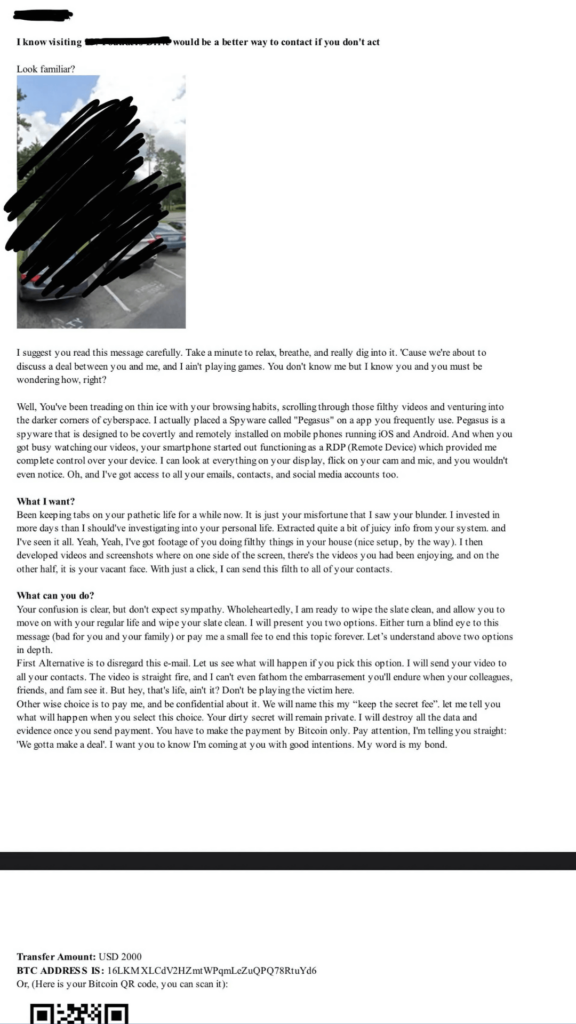
That same message is sent to thousands of inboxes every day. Because scammers run their campaigns in waves, it may appear in your inbox again occasionally.
To make the scam seem more real, scammers will mention personal information such as your name, phone number, and physical address, and in some cases, they even input the victim's password. Scammers usually obtain this information from past data breaches. For example, your information could be exposed if an online store or a social media platform where you have an account is hacked. They also send images of the victim's houses to instill fear, making people believe that physical harm may occur if they don't do what the scammers ask them to do.
What makes this scam believable is that Pegasus spyware is a real threat. Pegasus Spyware is a highly sophisticated malware that can infiltrate iOS and Android devices. Once installed, it can gain extensive information from your device, allowing it to track your location and read your SMS, emails, and encrypted data. They can even turn on your device's camera and microphone to spy on you.
You don't need to click anything or enter any information to get your device infected with this spyware. The worst part is that victims don't even realize their mobile devices have been hacked.
This is exactly what scammers rely on.
They want to scare you into thinking they have accessed compromising videos, photos, and messages when, in reality, you haven’t been hacked. If you were really being blackmailed, the blackmailer would send you a screenshot or video, not a long explanation about how they plan to blackmail you.
Another reason people think the scam is real is that the Pegasus spam email appears to come from your own email address. This is called spoofing, and it's a common trick used by scammers. They use software to disguise the sender's actual email address, making it look like the email is coming from your own account.
⇒ Quick Tip
- Scammers use spoofing software to clone your phone number too. That's why you should never answer if you get a phone call from your own number.
Installing Pegasus Is Too Expensive For Scammers
Installing Pegasus is very expensive, costing around $100,000 per device, with a license fee of $500,000. Scammers don't have the budget to install this software on the phones of regular people like you and me.
The Israeli cyber-intelligence firm NSO Group, which created Pegasus, only sells it to government security and law enforcement agencies. Pegasus is government spyware typically used for tracking high-profile targets and assisting in rescue operations, as well as fighting sex trafficking, drug trafficking, and terrorism. It’s not your typical spyware.
Scammers use Google Maps to generate images of your address
If having an image of your house worries you, you shouldn’t because they only use the Pegasus Spyware as a scare tactic to pressure you and impulsively make decisions.
According to news reports, a recipient of the same email didn't even falter because they knew it was a scam. Apparently, the scammers used a photo of their house before they renovated it, which immediately raised a red flag.
These scammers typically profile their target before they send this email. They may have gotten your publicly available information, such as your contact number and physical address.
They could have gotten this from social media, online directories, past phishing incidents, past data breaches, or a company that sells your data, which is why removing your personal information from the Internet would be a vital step to protect yourself.
How to Stay Safe from a Pegasus Email Scam
- Ignore suspicious emails that say your device is hacked, especially if they ask for money.
- Be cautious of messages that demand urgent payment. Acting out of fear can lead to falling for scams.
- If you get an email about Pegasus spyware being installed on your phone, block it and report it. Then, delete it. Do not reply or pay the ransom.
- Run a quick antivirus scan on your device to see if it finds anything. For peace of mind, change your passwords across all of your accounts.
- You can also consider reading this article, in which we explain the different steps you can take to stop spam emails.
Report the Scam
Warn your family and friends about this scam to prevent them from falling victim.
File a report with the appropriate authorities. Report scammers and any suspicious activity to the Federal Trade, and the FBI Internet Complaint Center by using the pages below:
- Report to the FTC
- Report to the FBI Internet Complaints Center
How to Protect Yourself More
Do you want to receive notifications about the most notorious scams on a regular basis? Subscribe to our scam alerts.
You will receive periodic emails from Scam Detector with exclusive tips. Those will include info on how to prevent fraud and insights about the newest tools you can use to fight crime.
Feel free to explore additional articles on related fraud. Last but not least, if you had any bad experiences, make sure to use the comments section below to expose the scammers!
Verify Another website
Are you just about to make a purchase online? See if the website is legit with our validator:
vldtr®

TOP MUST-WATCH FRAUD PREVENTION VIDEOS
1. Top 5 Amazon Scams in 2024 2. Top 5 PayPal Scams in 2024 3. How to spot a scam Email in 2024
Madalina is a fraud prevention specialist who writes helpful guides that teach people how to protect themselves from scams. After 8 years in tech support for Windows and macOS, she switched to fighting online fraud and scams making the world safer for everyone.
- Latest Posts by Madalina Dinita
-
Fake Check Alert: Protect Your Small Business
- -
Missing Child Scams: How Scammers Exploit Emotions
- -
Ozempic Scams: Why They’re Increasing and How to Stay Safe
- All Posts














Always love reading all of your tips for staying safe online. Thank you 🙏
Very detailed info about the generic scammers.
I fount this mail in my junk folder. I deleted it😰 from the archives too. Didn’t know.
But where do I report?
Hi I have been with you for over 10 years now and follow your alert scams with great interest if I may I use full on avast and have found them very good at grabbing SOME SCAM EMAILS ETC SO CAN YOU ADVISE ME IF I SHOULD STAY WITH THEM OR THINK OF A BETTER SAFE WEB. CHEERS KEEP UP THE GREAT WEB CHEERS