


Scammers take advantage of the holiday shopping season by sending SMS messages designed to trick unsuspecting victims into paying small fees or handing over personal and financial information. The “your package is stuck in customs” scam can be particularly convincing when people are ordering gifts and other goods online, making it easy to mistake a fake text for a legitimate communication from a delivery service.
Find out more about the stuck in customs scam below and how to spot and avoid it.
Scam Detectors Most Trusted Websites in Online Security
- Guard.io (100): Protect your digital world on any device – Guardio stops scams and phishing in their tracks.
- Incogni.com (100): Delete your personal data from the internet and protect against scams and identity theft.
- ExpressVPN (100) Stay secure and anonymous online - Best VPN Out There
Stuck in Customs Scam: How It Works
Scammers gather cell phone numbers from any number of sources. They then send bulk loads of messages out, with the hope that at least a small percentage of people will respond to them.
These messages usually include the following:
- “Your delivery has been held at customs.”
- A request for a fee.
- A link to pay the fee.
They may also have the name of a popular delivery service, such as DHL or FedEx, or even claim to come from the USPS.
If the recipient clicks the link, they’ll be taken to a legitimate-looking site to make the payment, which is usually only a small amount. Scammers keep these amounts small so that they don’t raise too much suspicion.
If the victim enters their card details, they may give scammers both their money and sensitive financial information, which can be used for additional fraud or identity theft.
Beating the Stuck in Customs Scam
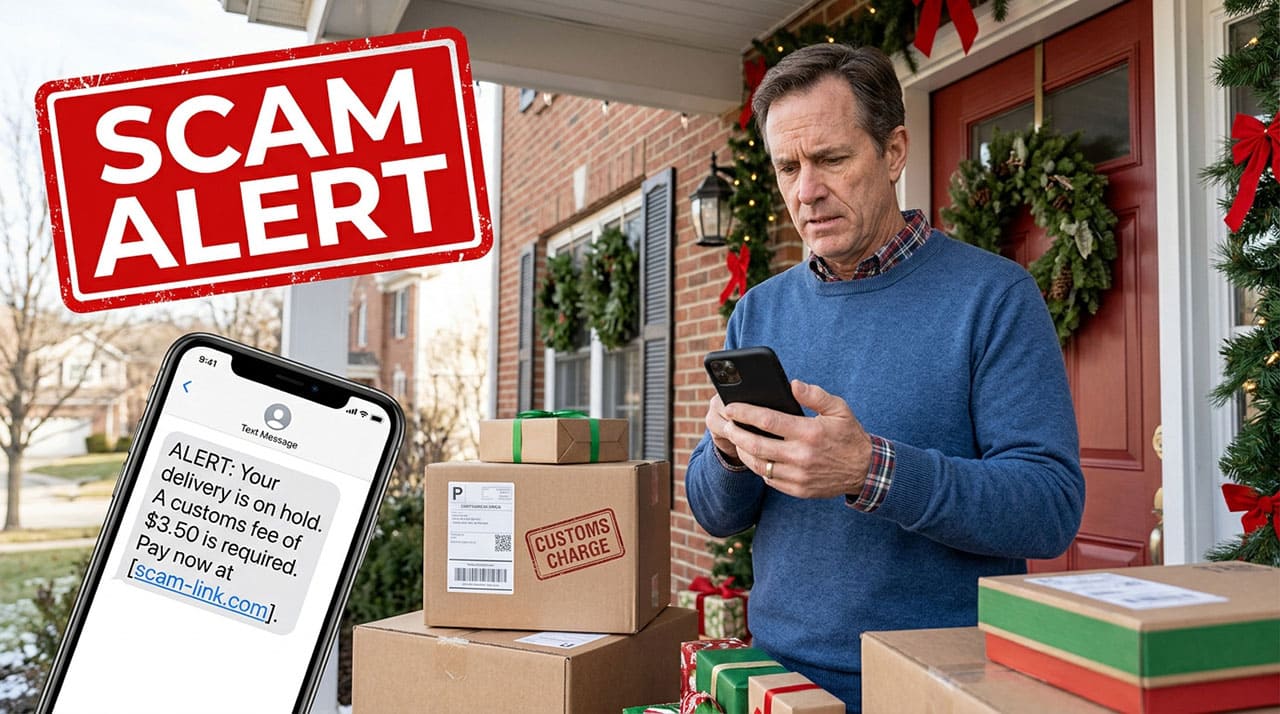
If your delivery is genuinely stuck at customs, you are unlikely to receive a random SMS text asking for payment. You can check the status of any packages you’re expecting by navigating to the retailer’s or courier’s website and using the tracking information provided when you made the order.
Genuine couriers, including the postal service, will never:
- Send an unexpected text containing a payment link, particularly when you did not request tracking notifications
- Say they need a verification fee that they will refund
- Direct you to contact an unfamiliar email address, phone number, or messaging account provided in the text
- Ask for payment in cryptocurrency
Report these messages as spam and don't click the links. Malicious links can lead to fake websites, phishing attempts, or, in some cases, malware designed to steal information.
Stay Safe From Scammers This Holiday Season
These types of scams become common as people start to buy more ahead of the holiday season. Make a note of any order you place, including tracking details, so you can quickly verify whether messages are genuine or not. If you’re ordering via your smartphone, it’s easy to take a screenshot once you’ve placed an order. Then, if you encounter any difficulties, you can quickly retrieve the order number and contact the relevant retailer.
Keep in mind that legitimate customs duties, taxes or other import charges can apply to some international shipments.
For ongoing advice on the scams targeting online shoppers, sign up for Scam Detector’s Scam Alerts. You’ll receive useful updates straight into your inbox to keep you safer all year round.
Verify Another website
Are you just about to make a purchase online? See if the website is legit with our validator:
vldtr®

TOP MUST-WATCH FRAUD PREVENTION VIDEOS
1. Top 5 Amazon Scams in 2024 2. Top 5 PayPal Scams in 2024 3. How to spot a scam Email in 2024
When my sweet old grandmother got caught up in an Amazon gift card scam, I decided then and there that I needed to do whatever I could to inform as many people as possible about the grifters of the world. That’s what I do here – writing about modern scams so you don’t get caught out.