

Have you ever been contacted by someone who suddenly insisted on moving to a different platform to chat? This could be a platform-hopping scam. Someone wants you to move to a less secure platform where they can, potentially, take money or details from you, then disappear.
Discover how to spot the platform-hopping scam and ways to be safer when interacting online.
Scam Detectors Most Trusted Websites in Online Security
- Guard.io (100): Protect your digital world on any device – Guardio stops scams and phishing in their tracks.
- Incogni.com (100): Delete your personal data from the internet and protect against scams and identity theft.
- ExpressVPN (100) Stay secure and anonymous online - Best VPN Out There
What Is a Platform Hopping Scam?
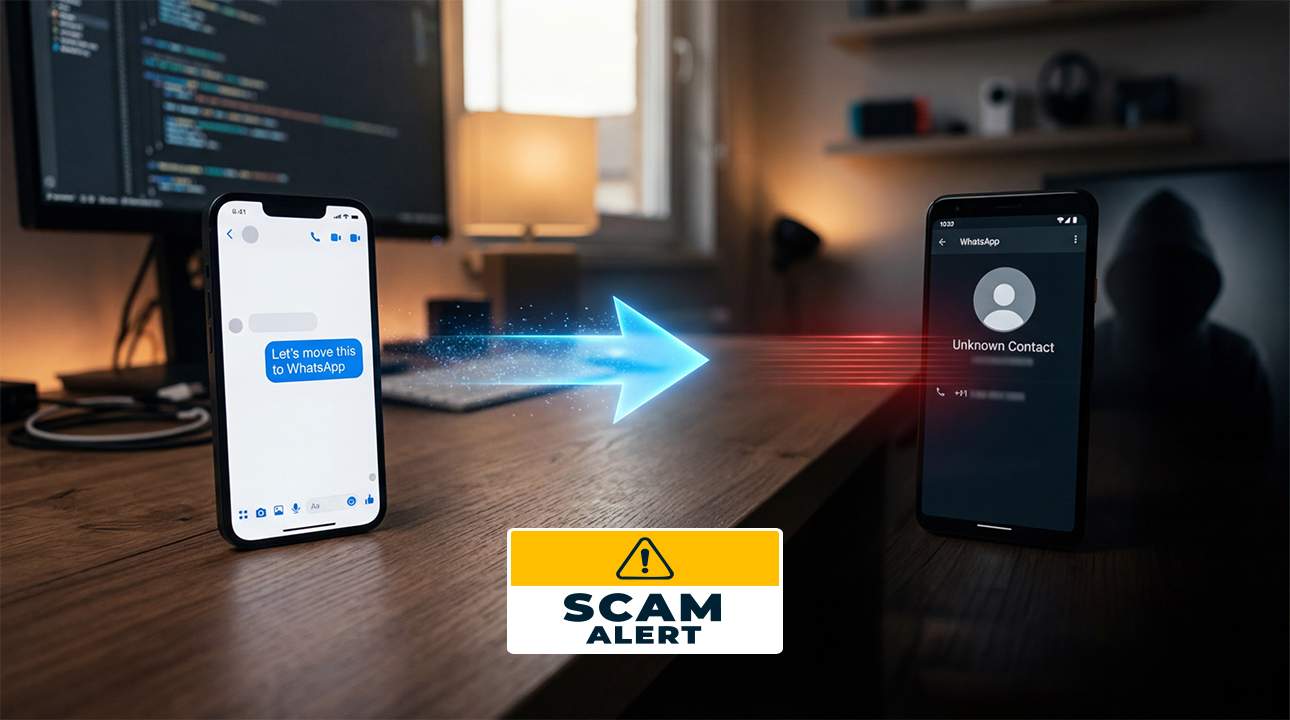
A platform-hopping scam is where a malicious actor contacts you via one platform, then asks to switch the communication to another one. They do this to make the conversation less secure and more challenging to record.
Scammers may use platform hopping to:
- Trick you into making payments.
- Steal personal or sensitive information.
- Sign you up for fake “investment opportunities.”
Examples include an email supposedly from a reputable firm, such as Zillow. You get invited to view a property, then are asked to speak on WhatsApp. Once you start chatting on WhatsApp, you’re asked to pay a fee to book the tour of the property. Once they have your money, they delete their details from WhatsApp.
Platform Hopping Security Risk Explained
Why is it so problematic to switch to another platform? Primarily because it removes any digital record of the interaction taking place from the original platform. Say you’re trying to sell some garden furniture on Facebook Marketplace. The “buyer” wants to chat on WhatsApp. If you do, there’s no record of the conversation or any payment information on FB, meaning it’s challenging for you to raise a complaint – at least with Facebook.
Similarly, a customer service representative may contact you via email, then ask to chat on Telegram. The Telegram conversation can be deleted, and that person can effectively disappear. You will have no recourse if the individual takes money from you or steals your personal details.
Major platforms have built-in technology to check for keywords and message structures associated with scams. Private messaging apps don’t have this, which makes them much less secure.
Platform Hopping Scam “Red Flags”
These red flags should warn you that the interaction is a scam and not genuine:
- Asking to switch to a different platform: There’s rarely a good reason to do this.
- Emails from payment services: A buyer shouldn’t need to get their payment provider to contact you.
- Requests for fees: Never pay anything to anyone online to “authorize” a sale or other services.
- Overly chatty messages: Someone whom you have just met online is unlikely to chat to you about personal items, such as your location or job.
- Complicating the buying process: If you’re selling via an online marketplace, like Facebook Marketplace, you’ll have specified ways to pay. Buyers who insist on using complex or unusual payment methods are rarely genuine.
Even someone you “know” could have been hacked and is now being impersonated, so be extra vigilant any time someone suggests shifting a conversation to another platform.
Stay Safe and Avoid Platform Hopping Scams
Here are some simple ways to stay safe online:
- State that you prefer to carry on chatting on the original platform. You can say you don’t have access to the service they’re suggesting. If they push, it’s more than likely a scam.
- Verify the identity of the individual. An email or message from a customer service person can be verified by calling the company on their main number. Check someone’s Facebook profile to see if it’s new or has very few friends.
- Never pay a fee or click a link sent in a message.
- Report anything suspicious to the platform you connected to. Companies like Meta regularly remove fake accounts, so reporting does work.
Keep yourself informed by signing up for Scam Detector’s Scam Alerts. Online scams are changing and advancing all the time, so the more you know, the easier it is to stay safe on your favorite platforms.
Verify Another website
Are you just about to make a purchase online? See if the website is legit with our validator:
vldtr®

TOP MUST-WATCH FRAUD PREVENTION VIDEOS
1. Top 5 Amazon Scams in 2024 2. Top 5 PayPal Scams in 2024 3. How to spot a scam Email in 2024
When my sweet old grandmother got caught up in an Amazon gift card scam, I decided then and there that I needed to do whatever I could to inform as many people as possible about the grifters of the world. That’s what I do here – writing about modern scams so you don’t get caught out.